
Loading...
Serving Merced, CA and surrounding areas. (209) 308-1866
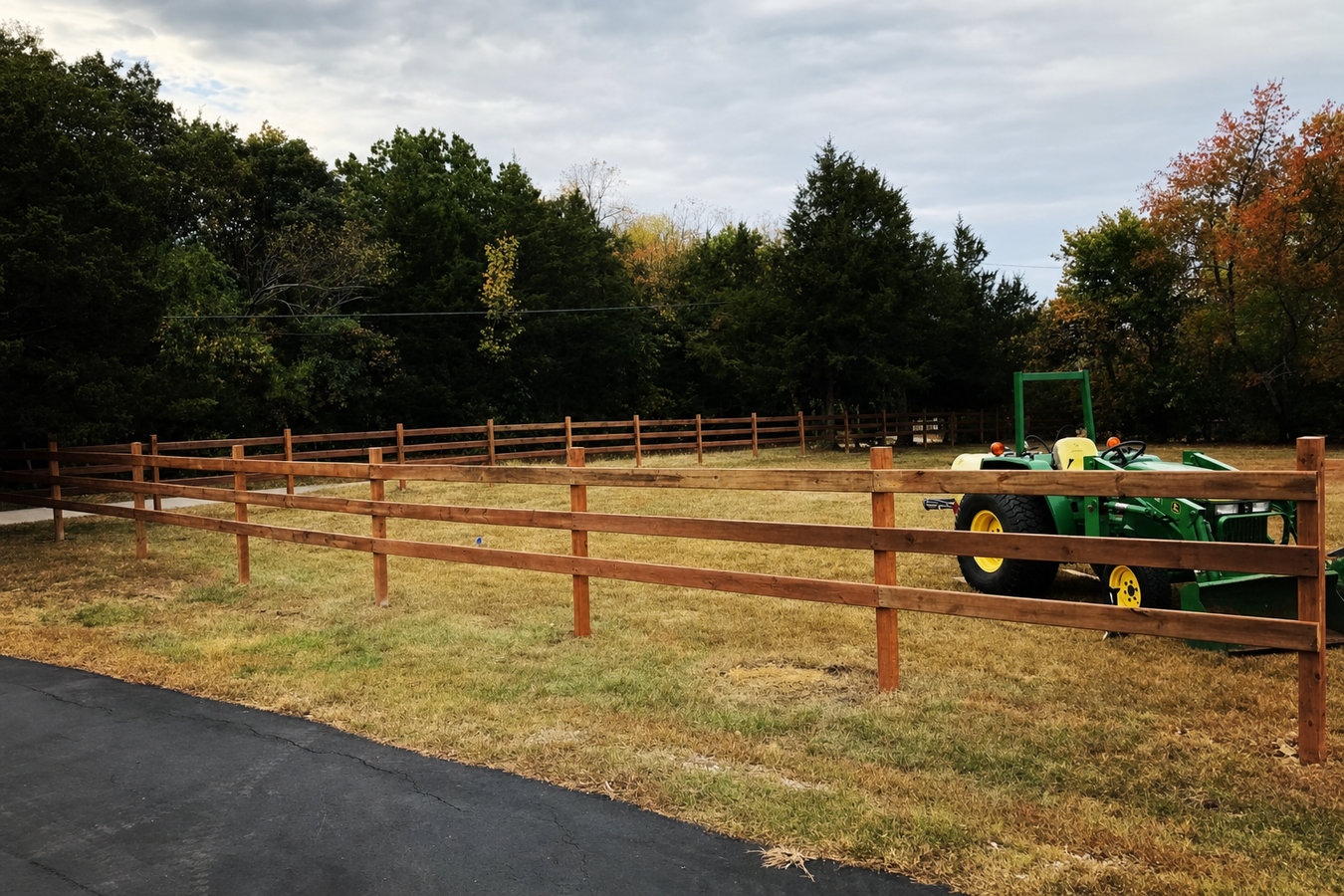
Clay soils, coyote pressure, and baking Central Valley summers require fencing built for this specific place. We set posts deep, tension wire properly, and hang gates that hold up.
Farm and ranch fencing in Merced is built to do a specific job - keeping livestock contained, marking property boundaries, and standing up to the clay-heavy San Joaquin Valley soil that swells in wet winters and cracks in dry summers. Most pasture jobs in this area run one to three days for a small to mid-sized property, with larger acreage and multi-paddock layouts taking a week or more.
The type of fence that works depends on what animals you have and what threats are present. Merced-area properties face real coyote pressure, and a fence that looks solid from a distance can have gaps at ground level that a determined predator will find. If you are keeping horses, the right material and tension matter for safety - barbed wire is not a good fit. We have worked on properties all across Merced County and can tell you quickly what will hold up for your specific setup. If you are also thinking about containing dogs or smaller pets, our pet and dog fencing service covers those requirements as a separate install or as part of the same project.
For properties that need a straightforward, cost-effective perimeter, chain link fencing is another option worth considering - it is durable, low-maintenance, and can be sized and tensioned to work for a range of livestock applications.
If you walk your fence line and notice posts tilting, heaving upward, or wobbling when you push on them, the fence has lost its structural integrity. In Merced's clay soils, posts that were not set deeply enough can shift over time as the soil cycles through wet winters and dry summers. A leaning post means the wire tension is gone and animals can push through.
Sagging wire means the fence is no longer doing its job. Animals learn quickly where the weak spots are and will test them. Rust and broken strands are signs that the wire has reached the end of its useful life - especially on older Merced properties where the original fence may have been installed decades ago.
If you have had a predator breach - or you are seeing signs of digging along your fence base - your current fence is not providing adequate protection. This is a common problem on Merced-area properties keeping chickens, ducks, or small goats. Coyotes are persistent and will find every gap.
If you are adding horses, goats, or poultry to a property previously fenced for cattle - or vice versa - your existing fence may not be the right type for the new animals. Different livestock have different fencing needs, and using the wrong fence is both a safety risk and a daily management problem.
We install the full range of agricultural fencing used across Merced County - woven wire for cattle and horses, high-tensile smooth wire for larger perimeters, barbed wire for cattle-only applications, and wood or steel board fencing for horse operations where visibility and a no-sharp-edge surface matter. Every project starts with walking your land so we understand your terrain, your animals, and any obstacles like irrigation lines or drainage ditches. Corner posts and brace assemblies get set in concrete regardless of fence type, because that is where all the tension lives and where a weak installation will show itself first.
For properties where predator pressure from coyotes is a concern - which is most of the Merced-area agricultural land - we can add a buried wire apron along the fence base to stop digging entry. Gates are treated as the most critical component of any farm fence: we use heavy-duty hardware, brace posts set in concrete, and latches that animals cannot accidentally open. Properties that also need access control can combine agricultural fencing with our pet and dog fencing or a chain link perimeter around a yard or outbuilding. Every job gets a written, itemized quote before work starts.
Best for cattle and horse properties where animals need a visible, push-resistant barrier across large pastures.
Suited to large perimeters where cost-per-foot matters and the fence line can be kept properly tensioned over long spans.
A cost-effective option for cattle-only applications where budget is the primary consideration.
The right fit for horse operations that need a highly visible, no-sharp-edge fence that horses cannot injure themselves on.
The San Joaquin Valley floor around Merced is dominated by heavy clay soils that swell when wet and crack when dry. That repeated swelling and shrinking can slowly push fence posts upward or cause them to lean over time - a problem driven by the valley's wet-dry seasonal cycle. We set corner and gate posts deeper than the bare minimum and use concrete collars to keep them stable through Merced's wet winters and summers that regularly exceed 100 degrees. The summer heat also affects installation timing: our crews start early in the morning during July and August so the work gets done properly, not rushed to beat the heat. For larger properties, we account for tule fog in December through February, which can slow work on open ground where long fence lines need to be run accurately.
Merced County also has specific rules for fencing that borders public roads or irrigation canals - situations that come up regularly on agricultural land in this area. We check with Merced County Planning and Community Development before starting any job where the fence line runs near a road or a shared property boundary. Agricultural landowners in Livingston and Los Banos face the same soil conditions and county rules, and we bring the same approach to every property across the valley.
We reply within one business day. We will ask a few basic questions - how many acres or linear feet, what animals you are keeping, and whether there is existing fence to tie into or remove. You do not need all the answers yet - just a general sense of what you are trying to accomplish.
We walk the property with you, look at the terrain, note any obstacles like irrigation lines or drainage ditches, and measure the fence line. A written, itemized estimate follows within a few days - breaking out materials, labor, and site prep separately so you can compare bids accurately.
We confirm whether any county notifications or setback requirements apply to your specific fence location - particularly if it runs along a road or shared property line. We call 811 before any post is driven to have underground utilities marked, and we ask you to flag any irrigation lines you know about.
Corner and brace posts go in first, then line posts, then wire or rails. Gates are hung last and tested before we leave. We walk the entire fence line with you before packing up - checking tension, gates, and any ground-level gaps - and we tell you what to watch for in the first few months.
Written quote, no pressure. We walk your land with you before anything is committed.
(209) 308-1866The valley clay around Merced expands in wet winters and shrinks in dry summers, and that movement is what pushes improperly set posts out of the ground over time. We set posts deeper than the minimum and use concrete footings on every corner and gate post - which is why our farm fences hold their tension year after year instead of going slack after the first wet season.
Coyotes are persistent across the San Joaquin Valley, and most standard farm fence designs have gaps at ground level that a determined animal will exploit. For properties with poultry or small livestock, we design with a buried wire apron and appropriate fence height so the barrier actually protects your animals - not just encloses them.
Merced County has specific rules for fencing near roads, irrigation canals, and shared property lines - and these come up on agricultural land more often than most landowners expect. We confirm any applicable requirements before the first post goes in, so you are not getting a call from the county after the fence is already built.
Every farm fencing estimate we provide breaks out materials, labor, and site prep as separate line items - so you can compare our bid against others accurately. No all-in numbers that hide where the cost is coming from. The University of California Cooperative Extension's guidance on agricultural fencing standards informs how we specify materials for different livestock applications.
Agricultural fencing is one of the more technically demanding types of fence work - getting the corner bracing, post depth, and wire tension right requires real experience with the specific soil and climate conditions in this area. Those details are what separate a fence that is still doing its job in twenty years from one that needs major repairs in five. For guidance on livestock fencing standards, the University of California Cooperative Extension publishes research-based guidance on fencing for California agriculture.
Secure enclosures for dogs and smaller animals that can be added to an existing farm fence perimeter or installed as a standalone yard fence.
Learn MoreA durable, low-maintenance option for outbuilding perimeters, yards, and utility enclosures alongside larger agricultural fencing projects.
Learn MoreLate spring and early fall book fast across the Central Valley - reach out now and we will walk your property and give you a written quote.